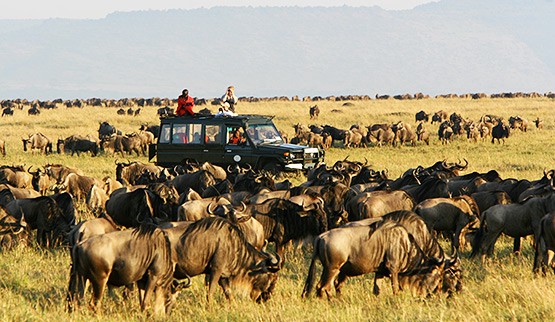
Whilst most people will remember to take their camera and/or video (or will use their mobile phone), not everyone thinks they need to take binoculars! Binoculars are essential for optimum wildlife viewing on safari (and a good pair of binoculars will make a BIG difference to your safari). We strongly recommend a pair of binoculars on safari. Get the most expensive you can afford (at least 8x or better still 10x magnification).
Kenya is a photographer’s dream. Not only does the boundless wildlife come in all shapes and sizes, but the continent is also blessed with stunning landscapes, colorful people and fabulous light! Don’t miss out. Buy a camera, if you don’t already have one.
Clothes and toiletries
Of course, you’re not going to forget clothes! But are you taking the right clothes and are you within those weight restrictions your travel agent told you about for those light aircraft flights?
Most international airlines will restrict your check-in luggage to around 20 to 30kgs (55lbs). However, if your Kenya safari itinerary includes any light aircraft flights, then this can mean as little as 12 to 15 kgs (sometimes including your hand luggage!).
Remember, a same-day laundry service is usually available in most safari camps and lodges. This means you do not need a change of clothes for each day you are on safari! The exception will be for mobile tented safaris where it is often difficult, due the mobile nature, to offer a laundry service. It may also be possible to leave a bag with the Charter Company, or person meeting you, for the duration of the safari portion. When in doubt, ask your travel agent.
Casual but comfortable; Casual, comfortable clothing is suitable throughout the year when on safari. Whilst you may elect to start a completely new safari ‘wardrobe’ it is really not necessary to look like an extra on the set of Out of Africa!
Apart from selecting reasonably neutral or ‘non-bright’ colored clothing, safari-wear is generally casual and practical. Be sure you take clothes that you feel comfortable in – especially when it comes to your walking/hiking boots. The newer quick-drying fabrics, shirts with ventilation and trousers that convert into shorts are all worth considering.
Layering is key
Wearing clothes in layers is the most practical way to cope with fluctuating day/night temperatures and cool evenings whilst on safari. As the day warms up you can peel off another layer. Then as it begins to cool toward evening, you can put them back on. Here’s the “must-haves” to pack for your safari:
T-shirt, shirt or blouse – long sleeves and collars help to protect from the sun and mosquitoes
Fleece or warm jacket
A pair of safari trousers – those that zip off at the knees are very handy, too
Comfortable walking shoes (or boots) and socks
Hat
Bandanna or cotton scarf and a sarong (kanga, pareo, kikoi)
Maybe a pair of open sports sandals for general daytime use in warmer months
Swimsuit – a number of lodges and camps have swimming pools
An elegantly casual outfit for dinner at the smarter hotels
A light, compact raincoat if it is likely, you will encounter rain
And, of course, your undergarments
Dull and/or neutral colors are more suitable for safari, white and/or bright colors are not practical as they tend to stand out – definitely not advisable on a walking safari. Cotton clothing is recommended although the newer synthetic safari clothing lines are quick drying and extremely comfortable.
Phone, music, tablet or laptop
What you must pack for your safari are your phone, music, tablet or laptop – and their respective chargers, country-specific adaptor plugs.
Preventative pharmaceuticals
This is just a fancy way of saying ‘meds’ – stuff you need, just in case the worst happens: diarrhea, headaches, heartburn, insect repellent, hand sanitizer, bites (antihistamine), indigestion, sore throat (lozenges), eye drops, and most important – anti-malarial tablets.
Odds & ends
A good torch (flashlight) is a must. It can be pitch black in the bush or in your tent in the middle of the night. A rechargeable torch is ideal but a small battery-powered torch is sufficient. The new LED miner’s lights that fit on your head (and leave your hands free) are also a good option. A smaller (pencil) torch for emergencies or looking at star maps is also worth considering. Most camps will provide a torch, or will walk you back to your tent as required, but being self-sufficient is always a good idea.
A good book. It never hurts to have an interesting book when traveling. You never know when you are going to be delayed at the airport or fall victim to Africa time!
A travel diary or journal is something we recommend. You will see and experience so much in such a short period of time on safari, that the only way to maintain a good record of it will be to write it down. It does require discipline, but will serve as an invaluable record of your safari adventure.
Hand luggage
Firstly, try to restrict your hand luggage to one item only, if for no other reason than more than one item makes travel that much harder. And, yes, a handbag qualifies as a second item! Obviously, that one item should be of a size that is acceptable as carry-on luggage by the airlines.
If you are a photographer, then this will mean you must have sufficient space in your camera bag for travel documents, your prescription medication and/or glasses, binoculars and even a change of clothes.
Bear in mind that restrictions on what can and cannot be taken on board an aircraft are still in place – including for liquids, flammables and sharp objects. The rules change frequently, so please double check and take heed.