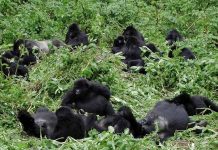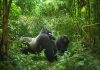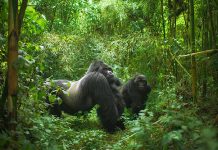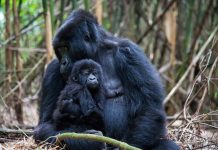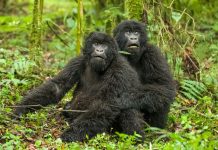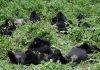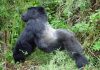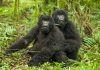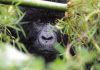
There are only about 900 mountain gorillas left on Earth and trekking into their native forests is the only way to see these critically endangered gorillas, as they cannot survive in captivity. Trekking for gorillas in Africa’s emerald rain forests and observing the everyday interactions of these vulnerable primates is arguably one of life’s greatest privileges.
In Uganda there are various areas in which you can trek, and accommodation can be booked according to where you’ll get a trekking permit. In Bwindi, there are 4 sectors to start the trek that is Rushaga, Ruhengeri, Nkuringo and Buhoma. There is another national park for gorilla trekking in Uganda called Mgahinga Gorilla National Park.
Gorilla trekking in Rwanda only happens in Volcanoes National Park – everyone starts from the same visitor’s centre (which can get very busy during the dry seasons) and are dispersed into specific trekking areas based on fitness levels and the length of the trek. In Congo, you and your guide simply walk straight into the forest from camp and start searching for gorillas.
Volcanoes National Park is a mystical backdrop for immersive gorilla conservation experiences in Rwanda. Gorillas are critically endangered primates and highly sociable creatures that spend most of their waking hours searching for food on the ground, moving less than 1 kilometer (0.6 miles) a day – which makes them easily traceable. You’ll be guided by an experienced gorilla tracker through the park’s towering African redwoods and bamboo, weaving vines, and flowering lobelia’s to the area where you’ll experience a soul-stirring, face-to-face encounter with one of mankind’s closest living relatives.
The base for pioneering primatologist Dian Fossey, which makes it authentic Gorillas in the Mist country – you can even pay your respects at Fossey’s grave. It’s a well-protected and monitored reserve full of monkeys (including the rare golden monkey) and forest birds. At least 10% of the revenue from tourism goes to community projects around the park, reinforcing the positive impact of gorilla trekking in Rwanda and making conservation of these great apes meaningful to rural communities in a very practical way.
The price of a permit is $1500 USD per person for spending one hour with the gorillas in Rwanda. These are often sold out up to a year in advance for a trek during the long dry season (June to September), so we recommend booking your trip as soon as you know you want to go gorilla trekking in Rwanda.
In Uganda, Mountain gorillas can survive only in their natural habitat, so trekking into their native forests like Uganda’s Bwindi Impenetrable Forest is your only chance to see these gorillas in the wild. There are strict regulations in place – like the Uganda gorilla trekking permit requirements – to ensure the health and safety of these animals.
Daily viewings of each gorilla group are very limited, so you need to book your Uganda gorilla trekking trip about a year in advance. The good news is that the country’s trekking permits are among the most affordable, so Uganda is where to see gorillas in Africa if you’re on a tight budget.
Uganda’s mountain gorillas live in Bwindi Impenetrable Forest National Park, a cloak of tangled green that covers the country’s south-western mountains. It’s a day’s drive (about 10 to 11 hours) from the capital Kampala or a quick (but more costly) charter flight – so you’ll work a little harder to get there than in Rwanda, but it’s worth it! Since it gives you the chance to view the country side.
If you’re interested in seeing primate species other than gorillas in Africa, Bwindi will offer fantastic encounters with colobus monkeys and chimpanzees during your Uganda gorilla trekking adventure.
The guides try to get you as close to your designated gorilla family as possible. You need to be fit in order for you to have great time and to manage quite easily. The price of a permit is $700 USD per person to spend one hour with the gorillas in Uganda. You can also opt for a habituation permit of $1 500 USD, which allows you to go out with the researchers and spend up to four hours with the gorillas in the wild.
Uganda offers animal lovers who want to go on a Uganda gorilla trekking expedition a wonderful opportunity to combine it with a safari in one of Africa’s up-and-coming safari destinations. And Uganda’s low cost of trekking permits is a great choice for travelers looking for budget-friendly options to see gorillas in Africa.
Uganda’s parks are less crowded and accommodation facilities are more affordable due to the few visitors during the low seasons (March to May and October to November). This is the best time for budget-conscious visitors interested in a Uganda gorilla trekking trip.
Democratic Republic of Congo is the only country in the world where you can spot both lowland and mountain gorillas. It is the best country for seeing wild eastern lowland gorillas. Lowland gorillas can also be seen in zoos around the world while the mountain gorilla can only thrive in the wild. Lowland gorillas in DR Congo can be tracked at the Kahuzi Beiga National Park while the mountain gorillas are found in Virunga National Park.
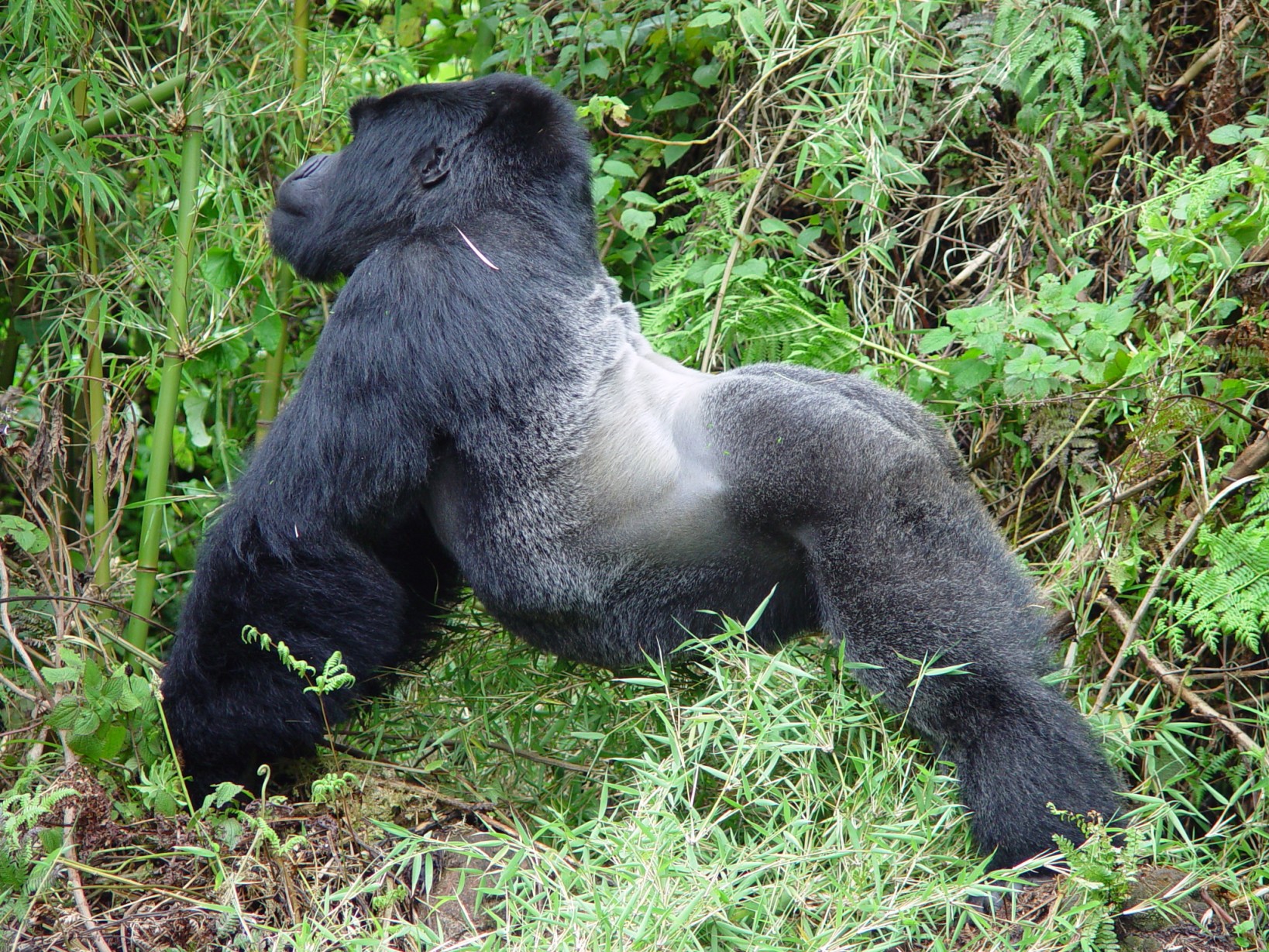
Mountain gorillas are generally larger in size than lowland gorillas with darker and thicker coats that are designed to help them survive in cold high altitudes. Both sub-species feed on leaves, tree shoots and fruits as well as living in families/groups led by a dominant male silver back that is responsible for the safety of the rest of the group members and keeping unruly individuals in check.
Attend briefing by the park rangers and wardens. The briefing covers several topics among which include the history of each gorilla group, gorilla habitats and gorilla trekking rules. Passports will be required for cross-checking. Checking passports helps the rangers allocate gorilla groups according to the language of the trekkers. Other criteria such as fitness level and personal preference are also taken into consideration when assigning visitors Congo gorilla families.
The chances of seeing the gorillas in Congo are high because the Rangers always know their last location. However there are challenges along the way which may prolong the time taken finding the group. These challenges include bad weather, the terrain and the distance from the starting point to the location of the particular gorilla group. Once you locate the gorilla group, expect some scrutiny by the dominant silver back.
Use this chance for it is the cheapest country to get permit for trekking gorillas. A mountain gorilla permit in Congo costs $400 which is lower than Rwanda ($1500) or Uganda ($700). You could even get them on discounts during the low seasons of the year.